
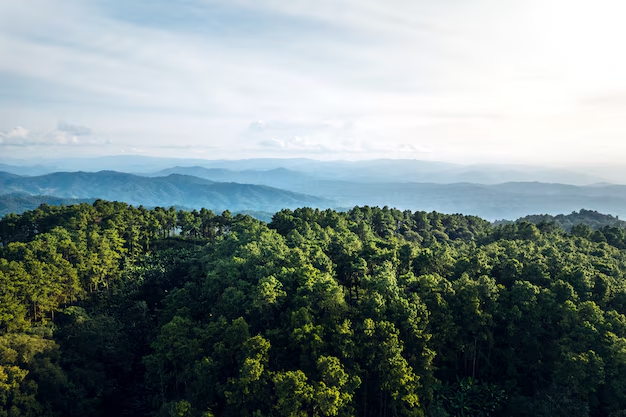

The term deforestation Gorontalo often sparks debate, but in reality, the province is becoming a model of sustainable forestry rather than a hotspot for forest loss. As one of Indonesia’s main producers of wood pellets—a renewable biomass energy source—Gorontalo demonstrates that forest-based industries can thrive under strict sustainability standards without harming natural ecosystems.
Gorontalo’s Rise in the Biomass Export Market
In recent years, Gorontalo has emerged as a key contributor to Indonesia’s wood pellet exports. The province now accounts for about 29.96% of total national production, playing a vital role in the country’s renewable energy supply chain.
Nationally, wood pellet production increased from 103,356 cubic meters in 2020 to 333,971 cubic meters in 2024—a threefold rise in just four years. Much of this growth comes from 35 licensed biomass plants, with a combined capacity of 3.18 million cubic meters per year.
Rather than expanding into natural forests, these facilities source materials from Industrial Forest Plantations (HTI)—lands cultivated specifically for sustainable timber and biomass. This ensures that export growth does not contribute to deforestation.
Baca juga: New Cleaning With Hydrogen Peroxide Tips
SVLK Certification: Guaranteeing Legal and Sustainable Exports
The foundation of Gorontalo’s sustainable export system lies in SVLK (Timber Legality and Sustainability Verification System)—Indonesia’s official certification program that verifies all wood products as legal and environmentally responsible.
Under SVLK, every wood pellet shipment must be traceable to licensed plantations, backed by independent audits and government monitoring. According to Erwan Sudaryanto, Director of Forest Product Processing and Marketing, “SVLK ensures every forest product harvested, transported, and traded in Indonesia is legal and sustainable under national law.”
This framework protects Indonesia’s forests while also strengthening its reputation in international markets. Countries like Japan, South Korea, and the European Union require legal and sustainable certification before importing biomass. SVLK compliance allows Gorontalo’s producers to meet these demands confidently.
How Deforestation Gorontalo Is Being Prevented
Although discussions around deforestation Gorontalo still arise, data shows that current forestry operations are focused on controlled, renewable production rather than natural forest clearing.
The province’s HTI-based plantations are replanted continuously, creating a closed-loop system where harvested trees are replaced with new growth. This approach maintains carbon absorption capacity while providing raw materials for green energy.
In addition, the Indonesian government has identified 10.36 million hectares of potential land for industrial plantations—ensuring that future biomass expansion will not encroach on protected forests.
Economic and Social Benefits
Sustainable exports bring more than just environmental gains—they also generate steady income, jobs, and local development. Many communities in Gorontalo are now directly involved in seedling production, tree planting, and biomass logistics, shifting livelihoods away from illegal logging toward long-term, legal opportunities.
By linking community welfare with responsible industry, Gorontalo creates a shared incentive to protect forests. Local governments and NGOs also collaborate to provide training in forest monitoring, certification compliance, and sustainable business practices, making green growth both practical and inclusive.
Global Recognition for Sustainable Exports
Gorontalo’s SVLK-certified products are increasingly sought after by global buyers seeking eco-friendly biomass energy. Export destinations like Japan and South Korea favor Indonesia because its legality verification aligns with international standards such as the EU Timber Regulation (EUTR) and FLEGT-VPA agreements.
This growing trust shows how strong environmental policies can drive trade success. Instead of being penalized for deforestation, Gorontalo’s exporters are rewarded for their transparency and sustainability.
Gorontalo’s success in wood pellet exports shows that green energy and forest protection can grow together. Through SVLK certification, strict plantation management, and community participation, the province has prevented deforestation while becoming a leader in sustainable biomass trade.
The takeaway is clear: responsible forestry doesn’t slow down progress—it drives it. Gorontalo’s approach to managing deforestation under sustainable control offers a real-world blueprint for balancing growth and conservation in Indonesia and beyond.
Don't forget to share our article elibrary.inbitef.ac.id, follow our newsletter. Thank you!